Youth/Adolescents
Safe Network's Whakahuranga Discovery programme is a specialised service for young people whose sexualised behaviour is causing concern or harm.
Whakahuranga Discovery has been developed specifically for youth aged 13 to 17 based on latest research and international best practice. It is a flexible programme that is responsive to the needs of the young person, providing them with the best possible support to discover new ways of thinking, change behaviours and move on towards a more positive future.
When is sexual behaviour concerning or harmful?
Sexual development is one of many areas of change for adolescents. Adolescents engage in and display a range of sexual behaviour that is healthy and normal for their age. But the following are signs that their sexual behaviour is harmful or concerning and that they may need specialist help:
- it is targeted at younger children or anyone more vulnerable
- it is secretive
- it is aggressive, forceful, manipulative or threatening
- it is not consensual
- it continues despite requests to stop
- the young person appears driven to engage in sexual behaviour regardless of whether or not they will be punished or reprimanded
- others complain about the young person's sexual behaviour or are adversely affected
- it increases in frequency, intensity or intrusiveness over time
- it is directed at adults who feel uncomfortable about it
- it is targeted at animals
- it includes using electronic technology to make, access or distribute images and videos of concerning and harmful sexual behaviour involving themselves or others
- verbal or physical expressions of anger precede, follow or accompany the sexual behaviour.
Safe Network's Problem Sexual Behaviour Indicator App can help you identify whether a young person’s behaviour is concerning or not.
How can Safe Network help?
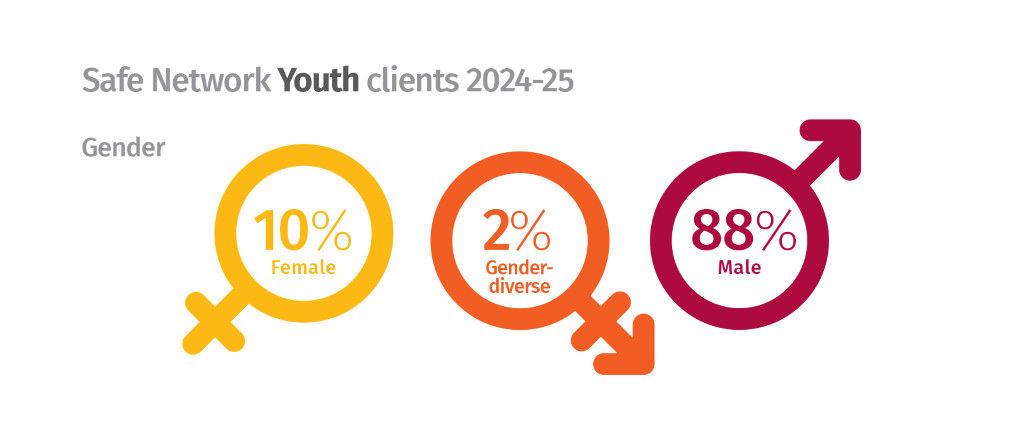
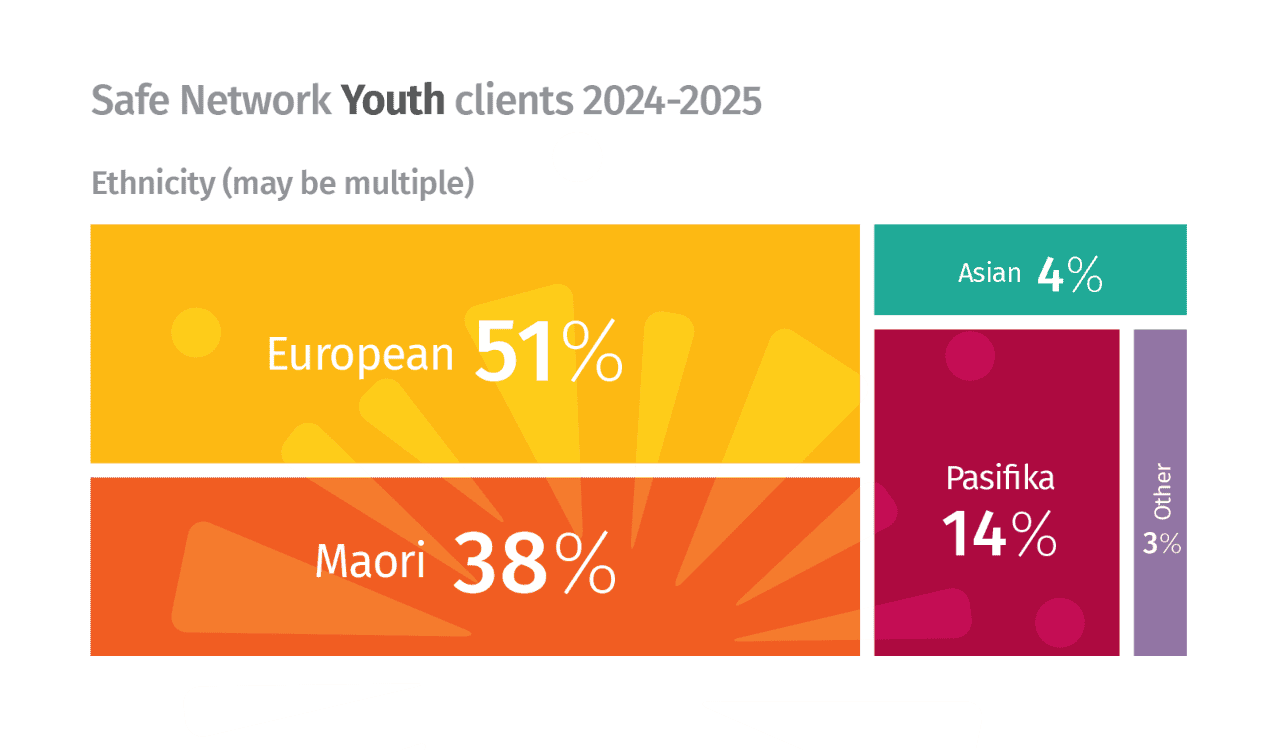
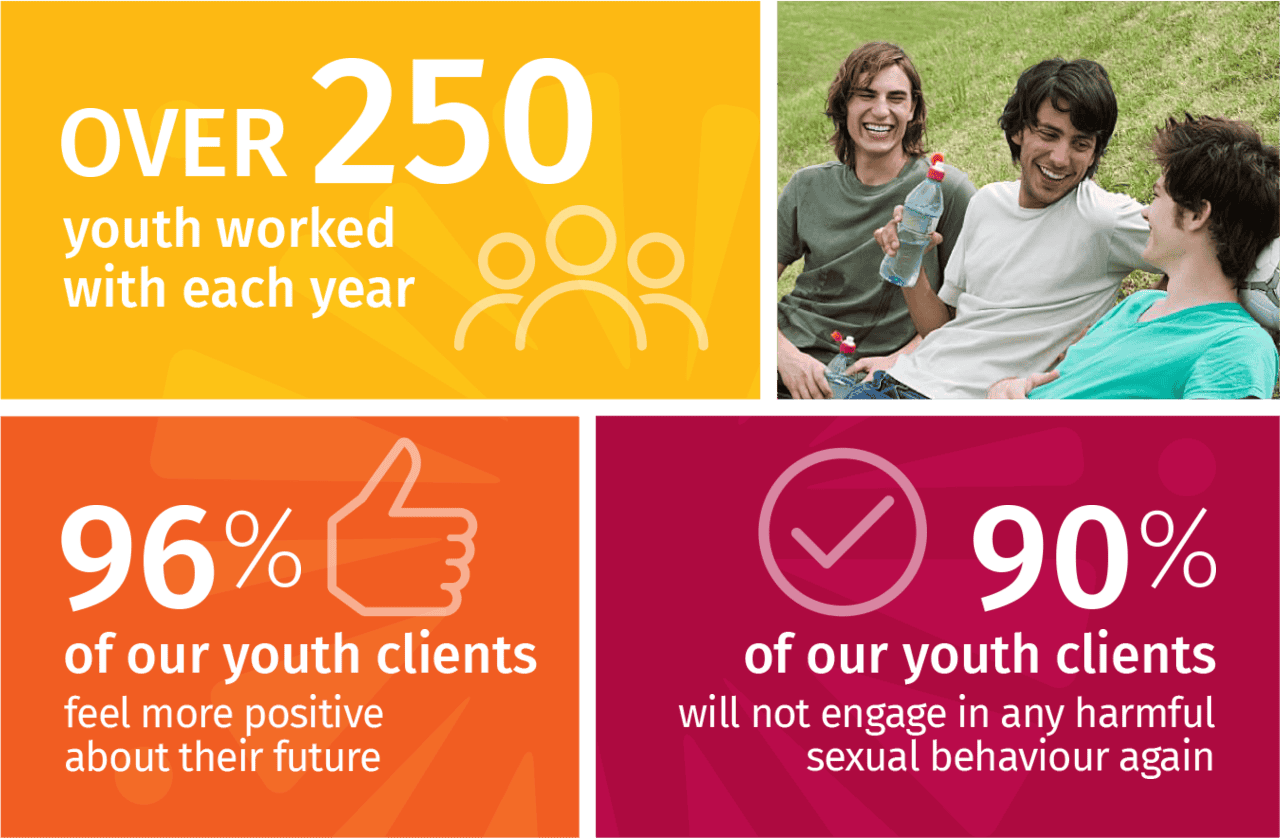
Youth Services Fact SheetEach year we work with over 250 youth. The flexibility of the Whakahuranga Discovery programme enables us to work with:
- boys, girls and gender diverse youth
- neuro-diverse youth and youth with special needs
- youth from different cultural groups.
- online and in-person harmful sexual behaviour.
What is the referral process?
The Whakahuranga Discovery programme is open to self-referrals or referrals from government agencies, community organisations, schools, health professionals, parents and caregivers. Oranga Tamariki need not be involved in making a referral to Safe Network.
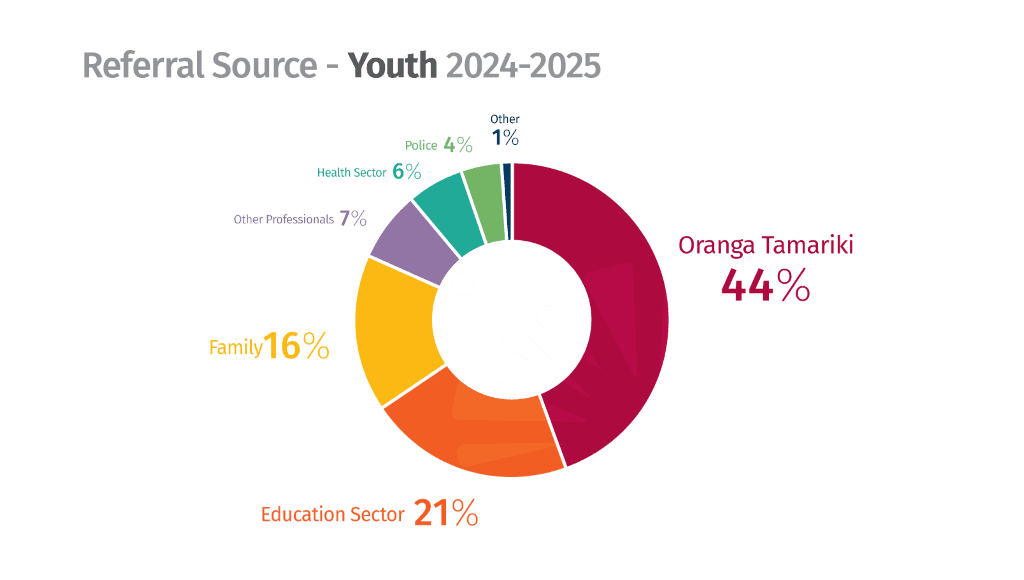
The first step in the process is for those wanting to refer a young person to complete a referral form.
Youth Services Referral FormOnce we receive the referral form, we undertake an initial review to identify whether Safe Network's services are right for the young person, and how best we can help meet their needs. Before we can start working with a young person, we require that consent is provided by them or an appropriate adult acting on their behalf.
Consenting to Services for Youth Clients Information SheetWhat is the assessment process?
Our assessment looks at the young person’s history and the sexual behaviour that is causing concern. This typically includes their personality traits, strengths and challenges, the nature and impacts of their sexual behaviour, and the needs of the family and community. Whanau, family members, caregivers and other professionals are also engaged in this process. This usually involves the following steps:
STEP 1 - Two or three interviews with the young person and key family members or support people

STEP 2 - Collection of any information and reports from other agencies or professionals who may be involved
STEP 3 - Completion of questionnaires by the young person and their adult family members or other support people.
Once complete, we will confirm if Safe Network's service is suitable for the young person and recommend next steps.
If our recommendation that the young person takes part in our Whakahuranga Discovery programme is accepted, we will assign one of our specialist clinicians to provide therapy and manage the young person’s progress through the programme. Because it is tailored to each young person's needs, the Whakahuranga Discovery programme can vary in duration and focus. Some young people may only require a brief intervention that focusses on strengthening their environment and helping the adults in their life support positive, safe behaviours. Others may need a more intensive programme of one-on-one therapy, group sessions and family sessions, typically up to twelve months in duration.
Youth Group Therapy Information for Clients
Oranga Tamariki funds a number of places on the programme and there is no charge for one of these. If all funded places are filled, then clients can choose to be waitlisted or pay for their services directly.
Pricing for Youth Services Information Sheet
Our Results
Our goal is to work with our youth clients so they are able to lead safe, balanced and healthy lives with positive connections to others, including:
- Being able to have safe intimate relationships with others
- No longer engaging in harmful sexual behaviour
- Being accepted as safe, responsible members of their family, whanau, and community.
Making a difference
Jack
Jack*, a 14-year-old male was referred to Safe Network for harmful sexual behaviour. READ MORE Living apart from his parents in a secure facility, his relationships with them had become increasingly conflict-ridden and estranged despite their efforts to stay connected to him. Recognising the importance of strong family support in helping Jack not engage in any harmful sexual behaviour in future, Safe worked separately with both his parents and then with him in order to help with family reconciliation. As a result, Jack initiated a meeting with his parents where, accompanied by a Safe Network support person, they reconnected and the relationship began to be restored. Jack's parents were able to support Jack's therapy until he successfully completed. READ LESS
Wiremu
Wiremu*, a 15-year-old Maori male was referred to Safe Network following incidents of harmful sexual behaviour. READ MORE Wiremu's therapy was based on Te Ao Māori, including the exchange of whakawhānaungatanga at each session and the exploration of Te Whare Tapa Whā as a holistic model for his wellbeing. Wiremu responded positively to this approach, which enabled him to connect more fully with his culture, further explore his values, feel better connection with others and plan for a positive future. Wiremu is now wanting to go into social work and is working towards this. READ LESS
Leo
Leo*, a 16 year-old male with mild intellectual disability, depression and anxiety issues, started at Safe Network worried about the deterioration in his relationships with his family and his on-going struggles at school. READ MORE Leo's therapist worked with him, his family and his Oranga Tamariki social worker in a holistic way. As a result, Leo's ability to manage his emotional responses and behaviours improved, he was better able to communicate with others, his performance at school improved and he successfully learned to drive. Leo completed his therapy with more confidence in himself, better relationships with his family and feeling he could succeed in life. READ LESS
- “I think Safe Network is a safe place to go to when you need help with your problems. Safe Network was really helpful for me.” Client
- “I felt heard, not judged and [they] never told me what to do.” Client
- “Being at Safe definitely helped me with my confidence and my wellbeing. I feel a lot happier now than I was before my attendance at Safe.” Client
- “I couldn't be more thankful. The care, understanding, and non-judgemental support my son received was beyond anything I expected. He was treated like a human being, not a problem.” Parent
- “As a parent, seeing my son treated with such care and respect was everything. I felt supported too—like I wasn’t alone in this. The whole process helped lift some of the weight I was carrying as a mother.” Parent
- “We were met with empathy, understanding, and cultural safety. Keep doing what you’re doing. It’s powerful, life-changing work, and we are so grateful.” Parent
- “Safe Network gave our family hope and healing.” Parent
- “As a Maori whanau, it meant a lot that [our son’s] cultural identity was respected and woven into the therapeutic process. He felt seen - not just as a client, but as a young Maori boy with whakapapa and wairua.” Parent
- “From the beginning, we were treated with dignity, care, and deep respect. There was no shame or judgement - only compassion.” Parent
FAQs

How do I make a referral?
As a first step, we recommend you use our Problem Sexual Behaviour indicator App[JW2.1] to see if the behaviour is concerning or not. Then complete the online referral Youth Services form
Youth Services Referral Form
Do Government agencies such as Oranga Tamariki need to be involved in making a referral to Safe Network?
No. We accept referrals directly from members of the public or other agencies and professionals. We would only involve Oranga Tamariki if we were to raise a notification of concern as per our Child Protection Policy
Is this service confidential?
Safe Network will keep all client information confidential except where you have consented for it to be released to a third party, where we are required to disclose it by law or where we raise a notification of concern. Refer to our Privacy Policy - Youth and our Child Protection Policy. We will only talk to people you have given us consent to contact.
Are there online options?
Yes. Although face-to-face appointments are preferred, we can offer online appointments where appropriate.
Online Services for Clients
Do you include families when you work with youth?
Yes, working with families is a key part of a youth's intervention. The extent of family work will depend on the youth's age, needs and the commitment of the family.
Can we get appointments outside of school or work hours?
Yes, subject to availability.
Does concerning or harmful sexualised behaviour mean a young person has been sexually abused?
No. Concerning or harmful sexual behaviour in young people can result from one or more of a wide range of contributing factors, with sexual abuse being just one of these.
What are your requirements for consent for your service?
Informed consent is a legal requirement for all health services. Depending on their age, youth are generally competent enough to give informed consent for themselves, but where they aren't, it requires an appropriate adult to consent on their behalf. More information about consenting for youth services is provided in the following information sheet.
Consenting to Services for Youth Clients Information Sheet
Does your service work?
Yes. Research shows that 90% of adolescents who complete a Safe Network programme will not engage in any further harmful sexual behaviour.
How much will it cost?
Current pricing for youth services (incl. GST) is provided in the following information sheet.
Pricing for Youth Services Information Sheet